

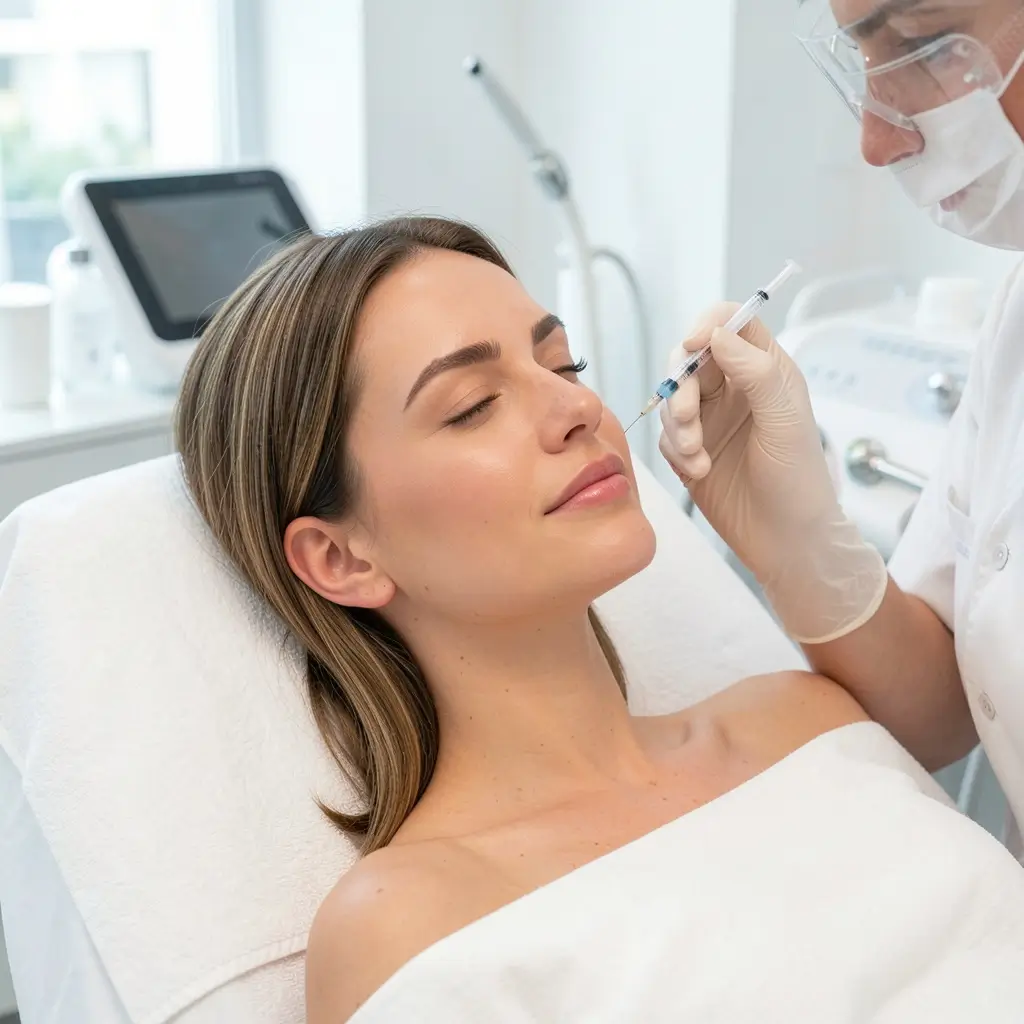
How Many Units of Botox Do You Need?
Many first-time patients ask us. “How many units of Botox do I need?” The number of units varies between individuals and depends on several factors. Proper dosage is important to us for your safety and effectiveness, and to avoid over- or underdone results. Factors influencing the appropriate amount of Botox include the treatment area, facial anatomy, muscle strength, age, and prior cosmetic enhancements.
We measure Botox in units and determine your required dosage after our first complimentary consultation. Let’s break down the unit ranges for common treatment areas, explain how we determine your correct prescription, and discuss what affects treatment.
What Is Botox?
Botox is a brand of neuromodulator manufactured from a purified form of botulinum toxin type A. By blocking the release of acetylcholine, the neurotransmitter that signals muscle contraction, this temporary muscle-relaxing treatment prevents targeted facial muscles from tightening. When these muscles cannot contract strongly, the overlying skin appears significantly smoother.
This proven wrinkle-reduction injection is widely used as an anti-aging procedure. It softens fine lines to restore a refreshed, youthful look. Because the effects are temporary, our team at The Laser Cafe tailors your routine maintenance plan during your Botox treatment consultation to keep your results seamless and natural-looking over time.
How Is a Unit of Botox Measured?
Botox is measured in units, not milliliters or syringes. The term unit refers to the biological activity, or strength, and not its physical volume. Botox units ensure dosage consistency because it’s manufactured to a standardized specification. Volume alone is not a useful measure, as even a small volume of liquid can contain different numbers of injectables depending on product preparation.
There is no universal Botox dosage for a given area, as facial anatomy varies between patients. This is why we have an initial Botox consultation with each patient to establish a treatment plan. We’ll discuss in depth how many injectable units you’ll need, based on your muscle activity, wrinkle severity, and desired results.
How Many Units of Botox Do You Need in Different Areas?
Most full-face treatments require 20 to 60 units of Botox, depending on which areas you target. Because larger, stronger muscles require higher doses than delicate ones, typical ranges vary significantly across different facial zones.
Forehead
The number of Botox units required to treat the forehead ranges from 10 to 30. We typically treat horizontal forehead lines in this area, also known as dynamic wrinkles, which are caused by repeated eyebrow movement. Forehead Botox dosage depends on the strength of your frontalis muscle, the depth of the lines, and your desired movement levels after treatment. Too many units or poor placement may result in lowered brows. Our experienced injectors focus on softening wrinkles while preserving your natural expression.
Masseter
Masseter Botox treatment typically requires approximately 20–40 units per side. The masseter, located on both sides of the face in the lower cheek and jaw area, is one of the strongest facial muscles. It requires a higher dose than other areas. While many people choose masseter Botox for jawline slimming and facial contouring, it can also relieve bruxism by reducing excessive teeth grinding and jaw muscle tension.
Crow’s Feet
The typical dosage to effectively treat crow’s feet ranges between 6 and 15 units per side. As we age, lateral canthal lines (crow’s feet) begin to form from repeated smiling and squinting. Botox relaxes the muscles responsible for these movements, allowing patients to notice improvements in the appearance of eye wrinkles and smile lines.
Mouth Corners
The typical dosage when treating the corners of your mouth is around 2 to 6 Botox units per side. Depressor muscles around your mouth pull the corners of your mouth downward as you age. Botox targets these muscles, softening a downturned smile. We don’t aim to lift the mouth dramatically, but rather to make subtle changes to improve facial balance. Treating the areas around your mouth is a common part of holistic lower-face rejuvenation, where we target the lower third of your face for a refreshed appearance.
Lips
The most common Botox treatment for the lips is a “lip flip” and typically requires 4-10 units. By relaxing the perioral muscles, a group of small, delicate muscles located directly around your mouth and lips, for upper lip enhancement. We often combine volume-increasing dermal fillers with a lip rejuvenation for maximum results. We also use Botox to correct a gummy smile, in which too much gum is visible above the upper teeth when smiling. Patients typically require around 2 to 6 units per side to correct this.
Neck
Botox dosage in the neck area ranges from 25 to 50 units, or more, depending on your desired results. The main treatment target, the platysma, is a broad muscle that extends across the neck. Treating the platysma bands often requires high dosages due to the size of the muscle. The effects of neck Botox include softening visible neck bands and enhancing lower face definition for comprehensive neck rejuvenation. The Nefertiti lift is one of our most popular neck treatments, sharpening your jawline and smoothing out neck lines. Individual dosage varies between patients and depends on muscle strength.
Why Does the Ideal Unit of Botox Vary With Different Body Areas?
Botox works differently depending on the specific muscle groups we target during your treatment. Your unique muscle anatomy dictates your dosage because muscles throughout the face and neck vary significantly in size, thickness, and overall physical capacity. For instance, large, dense, dynamic muscles like the masseter in the jaw require many more units to relax than the small, delicate muscle bands surrounding your eyes or lips.
Beyond your physical muscle strength, your personal treatment goals influence our final dosage. Whether you are looking for subtle wrinkle smoothing that preserves natural expression or maximum muscle relaxation to address medical concerns like jaw tension, we adjust our approach to fit your lifestyle. We carefully calculate the exact amount required for each injection site. It’s a meticulous process known as precision dosing. This allows our team to build a completely customized treatment plan that ensures safe, highly targeted, and natural-looking outcomes.
How Do the Botox Units Vary on Different People?
Botox is not a one-size-fits-all treatment. Our team treats many individuals, and their dosage comes down to the following factors:
Age
Muscle activity and skin quality naturally change as we age. While many younger patients get preventative Botox treatments, older patients seek to smooth more pronounced dynamic wrinkles.
Gender
Men typically have larger, stronger facial muscles than women. Due to this increased muscle strength, males often require more units to achieve similar results.
Muscle Strength
As we’ve discussed, some facial muscles are stronger due to more movement and require a higher dosage. During your consultation, we assess your muscle strength and movement to determine your ideal treatment.
Facial Anatomy
Facial anatomy includes factors such as muscle size, proportions, symmetry, and wrinkle location. These influence your treatment plan and help us deliver the correct dosage.
Desired Results
Not every patient wants the same results. Some prefer subtle wrinkle softening while maintaining expression. Others favor minimal muscle movement for smoother skin. We consider your preferences when mapping your treatment plan.
Previous Botox History
Patients who receive regular Botox treatment may notice changes in muscle movement over time. This may result in our team adjusting your next dosage based on how your body responds to treatment. We continuously refine your maintenance schedule to ensure consistent results.
While general Botox unit ranges provide a helpful guide, we base your ideal dosage on your individual assessment. By considering your facial anatomy, muscle strength, and treatment goals, we can recommend a customized dosage to deliver effective, natural-looking results.
Why Knowing the Right Units of Botox Matters?
Receiving the correct units of Botox is essential for achieving optimal treatment effectiveness. The precise dosage ensures you maintain a natural appearance, smoothing away wrinkles without sacrificing your genuine facial expressions. When an injector calculates a perfect dose, it delivers balanced results that look refreshed rather than altered.
If a practitioner relies on a rigid, one-size-fits-all approach instead of individual anatomy, the outcome suffers. Under-treatment means your lines will not fully soften. At the same time, over-treatment can restrict your natural facial movement and leave you with a frozen expression. This is why choosing a highly skilled professional is essential. We are focused on patient safety and satisfaction. At The Laser Cafe, our experienced clinical team prioritizes a meticulous, personalized approach to ensure your treatment is both perfectly safe and beautifully effective.
What If You Got Botox More or Less Than Required?
It is completely normal for first-time patients to feel anxious about getting their dosage wrong. If your results do not match your expectations, remember that a qualified injector can easily manage either scenario, and all temporary effects will completely wear off over time.
Too Few Units
If you receive an insufficient dose, it poses no medical risk, but it will reduce your overall treatment effectiveness. Your muscles will continue to contract, meaning fine lines will only partially soften, and the product will wear off much faster than the typical three to four months. Fortunately, a simple touch-up treatment can safely add a few extra units to achieve your goals. We routinely invite patients to a follow-up appointment two weeks after their session to check their progress.
Too Many Units
Receiving excessive units can temporarily cause unnatural movement restriction, a heavy sensation, or minor facial asymmetry. While this can be frustrating, Botox is not permanent and does not damage your muscles. Function will naturally return to normal within a few months. We always recommend allowing a two-week adjustment period for the product to fully settle before assessing your final look.
Get Safe and Effective Botox Injection at The Laser Cafe
There is no universal dosage approach to Botox. At The Laser Cafe, we create personalized Botox treatment plans based on your facial anatomy, muscle strength, treatment goals, and desired results. Our experienced injectors are committed to providing safe aesthetic care with precision dosing to achieve natural-looking results.
If you’re considering Botox in San Diego, schedule a consultation with our team to discuss your goals and create a treatment plan tailored to you. Learn more about our Botox treatments or contact us to book your consultation.
Highest Rated Laser Hair Removal & Medspa in San Diego, CA