
What Is Botox Used For? Cosmetic and Medical Uses Explained
EXCELLENT
1300+ reviews on

The Laser Cafe
- October 5, 2026
- 13 min read
Core Insights
- Botox treats wrinkles, migraines, muscle spasms, bladder problems, and excessive sweating.
- Botox temporarily relaxes targeted muscles and blocks nerve signals.
- Some Botox treatments are FDA-approved, while others remain off-label.
- Cosmetic Botox differs from therapeutic Botox in dosage, injection sites, and insurance coverage.
- Qualified medical professionals should explain Botox’s risks, benefits, and alternatives.
Most people think of Botox as a wrinkle treatment, but it actually has many more uses. For years, the FDA has approved it to treat neurological, urological, and glandular conditions. Despite its popularity as a cosmetic product, Botox also has many medical uses.
So what else is Botox used for? It can be used for chronic migraine, cervical dystonia, muscle spasticity, overactive bladder, severe underarm sweating, eyelid spasms, and crossed eyes. It’s also popular as a cosmetic treatment for wrinkles and fine lines.
This article covers every FDA-approved use of Botox, the conditions it can treat, and how cosmetic versus therapeutic Botox differs. It also highlights off-label or emerging uses, potential side effects, and what it can’t treat.
What Botox Is Made Of
Botox is a brand name for botulinum toxin type A. It is a neurotoxin derived from a bacterium called Clostridium botulinum. Botox is not the full bacterium itself. Instead, it’s a purified protein chemically isolated from the original organism. Thus, the injected dose is nothing like foodborne botulism.
Botox is administered in extremely small and precisely measured doses. The neurotoxic effect is temporary and confined to a specific injection site, making it safe for cosmetic and therapeutic use.
How Botox Works
Botox works by temporarily interrupting communication between nerves and their target tissues. Normally, your nerve endings release a neurotransmitter called acetylcholine. This neurotransmitter tells muscles to contract or glands to produce sweat. Botox pauses acetylcholine production, effectively “muting” the signal. That’s why frown lines, for example, appear smooth even when your brain tells them to contract.
As the nerve endings regenerate and repair themselves, the effects of the Botox will wear off. This takes about three to four months for cosmetic applications. Neural recovery time varies by treatment area, and therapeutic or medical applications often require longer intervals between injections.
FDA-Approved Uses of Botox
The FDA has approved Botox for a specific list of medical and cosmetic conditions, outlined below. For more information, please review the official FDA-approved cosmetic uses of Botox and FDA-approved medical uses of Botox fact sheets.
1. Chronic Migraine
Botox can be used to treat chronic migraines, defined as headaches that last for four hours or more per day for 15 or more days per month. This frequency is important. Chronic migraines are not the same as occasional migraines or headaches. Using Botox for migraines is a specialized treatment reserved for people living with high-frequency severe headaches.
Treating migraines with Botox involves injecting a series of small injections around the head and neck roughly every 12 weeks. This helps prevent migraine attacks by targeting nerve endings in the forehead, temples, back of the neck, and upper shoulders. It interrupts pain signals before they reach your central nervous system, preventing a migraine before it starts.
2. Cervical Dystonia (Neck Spasms)
Cervical dystonia is a rare neurological disorder that causes the neck muscles to spasm involuntarily, tilting the head into painful abnormal positions. Injecting Botox into the affected muscles can help reduce contractions and ease neck pain. Treating Cervical Dystonia was one of the earliest FDA-approved medical uses for Botox.
Healthcare providers often use electromyography (EMG) or ultrasound to map injection points in the neck before administering Botox. It’s not a cure for Cervical Dystonia, but it can significantly reduce pain and improve daily comfort for people living with the condition.
3. Upper and Lower Limb Spasticity
Spasticity is the muscle tightness and stiffness caused by a neurological issue. It is frequently a symptom of multiple sclerosis, cerebral palsy, and previous strokes. Botox is an FDA-approved treatment for spasticity in the upper and lower limbs. The goal is to improve comfort and mobility.
In this context, Botox relaxes hypercontracted muscle fibers and flexed joints. This can make simple tasks like walking or dressing much easier. It also makes physical therapy easier, allowing the patient to stretch better and improve their range of motion.
4. Overactive Bladder and Urinary Incontinence
Botox can be used to treat overactive bladder (OAB) and urinary incontinence by relaxing the muscles in the bladder wall. In someone with OAB, involuntary muscle contractions cause sudden urgency to urinate and frequent urination, often more than 8 times in 24 hours. Sometimes Botox may be prescribed as a treatment after other medications have not worked.
Treating the bladder with Botox involves administering micro-injections into the detrusor muscle, which forms the bladder wall. Relaxing this muscle increases the bladder’s holding capacity and stops the spasms that cause urination urgency or incontinence. Symptomatic relief lasts about six months.
5. Severe Underarm Sweating (Hyperhidrosis)
The FDA has approved Botox for severe primary axillary hyperhidrosis, which refers to sweating only in the underarm region. Botox has not yet been approved for hyperhidrosis in other areas. This treatment blocks the nerve signals that communicate with the sweat glands in the skin. It is generally only recommended when prescription antiperspirants have failed.
Patients usually start seeing results within three to seven days. Botox in the underarms can last up to six months before another round of injections will be required. The underarms only contain about 2% of your total sweat glands, so inhibiting them does not affect the body’s ability to cool itself.
6. Eye Conditions, Blepharospasm and Strabismus
Blepharospasm is a neurological condition that causes involuntary eyelid spasms, resulting in uncontrolled blinking and eye closures. Strabismus, also known as crossed eyes, is a condition that causes one eye to turn out, in, up, or down, while the other focuses on an object. Both conditions can be treated with Botox.
These conditions were the very first (1989) FDA-approved uses for Botox. This approval came over a decade before Botox was approved for cosmetic use as a wrinkle treatment. For blepharospasm, the injector administers Botox into the tiny eyelid muscles to prevent twitching. For strabismus, Botox goes into the extraocular muscles, which control eye movement.
7. Cosmetic Uses, Frown Lines, Forehead Lines and Crow’s Feet
Reducing wrinkles is the most well-known use of Botox. The FDA first approved Botox for frown lines (glabellar lines) in 2002. This approval has since expanded to cover additional facial areas, namely forehead lines, lateral canthal lines (crow’s feet), and platysma bands, ie: the vertical cords on the neck that pull down the jawline as we age.
The FDA also recommends how many units of Botox to use for each treatment area in its official dosing guidelines. Experienced injectors often use these guidelines as a base to build custom treatment plans based on the client’s needs.
Off-Label and Emerging Uses
Off-label refers to using an FDA-approved product in a way not outlined in its official approval label. Prescribing outside the approved label is legal and relatively common in medicine. It lets clinicians explore emerging uses of FDA-approved drugs.
1. TMJ Disorder, Jaw Clenching and Masseter Injections
Temporomandibular Joint Disorder (TMJ) affects the jaw joint and its surrounding muscles. It can cause jaw locking, pain while chewing, clicking, popping, and headaches. While the FDA has not formally approved Botox as a treatment for jaw conditions such as TMJ, it is currently administered off-label.
Ongoing research, including a 2023 literature review published in the Journal of Oral Rehabilitation, suggests that Botox may be an effective treatment for TMJ. Injections into the masseter muscles around the jaw have been shown to reduce jaw clenching, tension, grinding, and pain.
2. Aesthetic Off-Label Uses
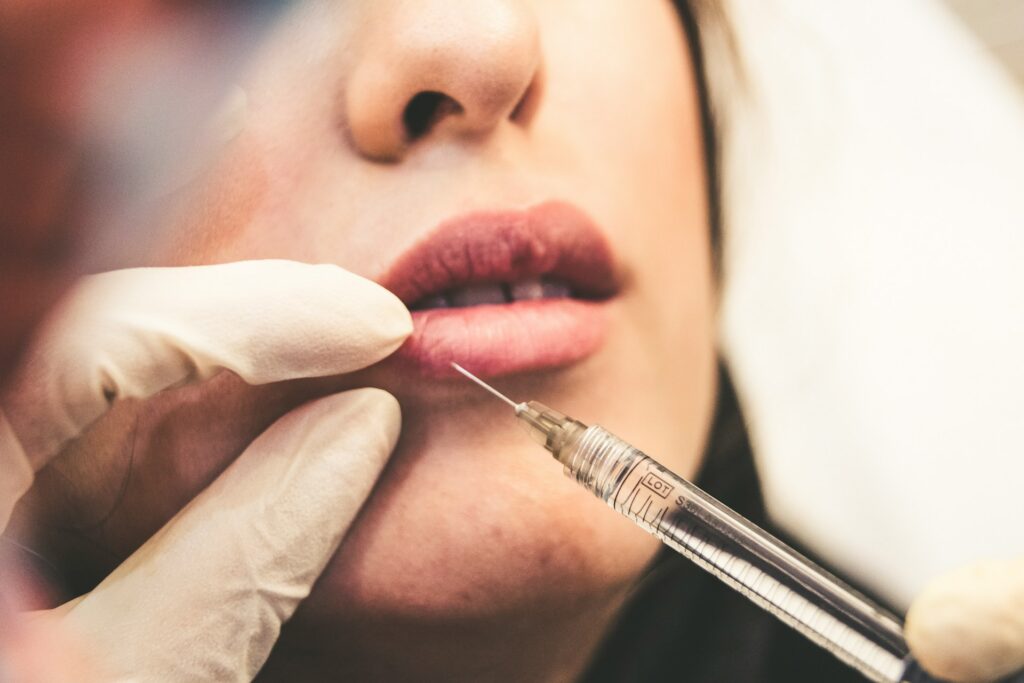
The “lip flip” is a popular aesthetic off-label use for Botox. During this treatment, the injector puts a tiny amount of Botox into the orbicularis oris muscle above the upper lip. When this muscle relaxes, the upper lip rolls up slightly, creating the illusion of fuller lips.
Another popular off-label use of Botox is correcting a gummy smile. To do this, injections target the muscles that lift the upper lip when you smile. Relaxing these muscles prevents the lip from raising too high and exposing the gums.
As the demand for cosmetic enhancements grows, injectors are expanding their Botox treatment lists to include other facial areas. This includes relaxing “bunny lines” on the nose, smoothing dimpled “orange peel” skin on the chin, lifting the eyebrows, and correcting fine lines under the eyes.
3. Uses Still Being Studied
Although still under review, there is promising research on Botox as a treatment for depression, anxiety, and other mental health disorders. A landmark study published in the Nature Scientific Journal found that patients who received Botox injections for both cosmetic and purely medical reasons reported lower rates of depression overall.
The study analyzed 40,000 treatment reports from the FDA’s Adverse Event Reporting System, FAERS. Researchers found that Botox injections have antidepressant properties, although the exact mechanism behind this is still unclear. Other studies, such as this randomized trial, suggest that Botox works best for depression when injected into the glabellar muscles (frown lines). This idea comes from the Facial Feedback Hypothesis, which suggests that facial expressions not only express our emotions but also strengthen them.
Other emerging uses for Botox include the treatment of Sialorrhea, drooling related to cerebral palsy, ALS, or stroke, and Achalasia, a rare swallowing disorder that prevents food from passing through the esophagus normally. Botox is also increasingly used as an off-label treatment for pelvic pain. Early research suggests the neurotoxin may help treat myofascial pelvic pain (MFPP) by relaxing pelvic floor muscles.
Cosmetic vs Therapeutic Botox: What Actually Differs
Cosmetic and therapeutic Botox is the same drug, just used differently. Both come from the same source, botulinum toxin type A, and work the same way by relaxing nerve endings that control specific tissues. The difference is in how many units are required, where they’re injected, and how often you need repeat injections.
Licensed aesthetic providers generally administer cosmetic injections, while medical specialists such as neurologists perform therapeutic injections. Therapeutic Botox usually targets deeper muscles or internal organs, and administering it requires more clinical expertise.
When it comes to insurance coverage, Botox is generally only covered when it is medically necessary. Patients usually need prior authorization to get insurance-covered medical Botox. Cosmetic treatments are not usually covered at all.
What to Ask an Injector Before You Book
Before booking an appointment, ask your Botox injector about their credentials, the products they use, and their safety protocols. Use the following list of questions as a guide.
- What credentials do you have?
Botox injections should only be administered by a licensed healthcare professional such as a Registered Nurse, board-certified dermatologist, or Physician Assistant (PA). - Who is the supervising physician in your clinic?
If the injector is a nurse or PA, state laws usually require them to work under a physician (MD). This increases accountability should anything go wrong. - What product will you be using for my injections?
Confirm whether they will be injecting Botox (onabotulinumtoxinA), Dysport (abobotulinumtoxinA), Xeomin (incobotulinumtoxinA), or Jeuveau (prabotulinumtoxinA). - How is the Botox stored and prepared?
Botox comes as a dehydrated powder that must be kept refrigerated. Before use, the injector will mix it with saline solution to reconstitute it. - How many units are you quoting me for?
Ask exactly how many units of Botox the injector is giving you to track your usage over time and prevent under-dosing. - How long will my Botox last?
Cosmetic Botox lasts three to four months on average. Avoid clinics that make unrealistic promises about the results. - What happens if something goes wrong?
Reputable providers have thorough safety protocols in place to prevent accidents. They should also offer a follow-up session to check your results and do touch-ups as needed.
What Botox Is Not Used For
Botox relaxes the muscles to prevent dynamic wrinkles that form when your face moves. It is not a miracle cure for all aesthetic concerns. The following conditions aren’t suited to Botox treatment and may respond better to fillers and other products.
- Static wrinkles that exist when your face is at rest. These permanent lines result from natural collagen loss and gravity as we age. Botox won’t change their appearance. A better way to target static wrinkles is microneedling or laser therapy to stimulate collagen production.
- Facial volume loss, including flattened cheeks, hollow temples, and under-eye hollows. These conditions come from fat and bone changes with age. Botox cannot replace lost volume and can make things look worse if you use it to chase it. Consider using dermal fillers instead.
- Skin laxity or sagging, which happens naturally as we age. It often shows up as drooping eyelids or jowls. Botox can’t fix this issue and can, in fact, make drooping appear worse when the muscles are relaxed. Radiofrequency skin tightening is a good non-surgical option for laxity; alternatively, consider an eyelid lift or full facelift.
- Double chin, which is caused by submental fat under the jawline. Botox does not affect fat cells and will not improve the appearance of a double chin. Instead, consider fat-freezing treatments or liposuction.
- Sun damage and hyperpigmentation. This condition is caused by overproduced melanin combined with a reduced cell turnover rate as we age. Botox targets muscles beneath the skin and doesn’t affect the surface layers. Topical retinoids, Vitamin C, chemical peels, and photofacials are a much better option.
- Deep nasolabial folds and marionette lines running from your nose to the corners of your mouth and chin. These are not true “wrinkles” and are actually caused by the fat pads in your face moving down as you age. Hyaluronic acid fillers can help to rectify this.
Side Effects, Risks and Who Should Avoid Botox
As with all FDA-approved drugs, Botox doesn’t come completely without risk. While the treatment is generally safe, patients should know about potential adverse effects. The following side effects, risks, and contraindications are sourced directly from the FDA prescribing information label.
Common, Temporary Side Effects
- Mild pain and bruising or swelling at the injection site
- Mild headaches for the first 24 hours after receiving facial injections
- Temporary sagging of the eyebrows or upper eyelids
- Dry eyes when injections are administered near the eyes
- Flu-like symptoms following the procedure
Seek Medical Attention
- Distant spread of toxin effects. This happens when the neurotoxin moves from the injection site into the surrounding tissue. Produces symptoms similar to botulism.
- Difficulty swallowing or breathing after receiving Botox injections.
- Signs of infection, including pus, pain, and a high fever.
- Muscle weakness, double vision, or vision loss.
Who Should Avoid Botox
- People with pre-existing heart conditions or a history of strokes.
- People with neuromuscular disorders such as ALS.
- People with compromised respiratory function, severe asthma, or dysphagia.
- People who are pregnant or breastfeeding
- People taking aminoglycoside antibiotics or muscle relaxants
- People with known allergies or hypersensitivity to any botulinum toxin
- People with an active skin infection at the injection site.
Call Now to Book a Botox Consultation in San Diego, CA
Understanding what Botox can be used for is important before deciding to do the treatment. Those interested in using it for medical purposes, such as bladder or eye conditions, should first consult with their primary healthcare provider.
For those interested in cosmetic Botox, consider visiting our established med spa in San Diego. Our team of licensed nurses has experience treating frown lines, crow’s feet, forehead lines, lips, and other facial areas. We quote per-unit pricing to keep it transparent how much Botox you get with every injection. Schedule a consultation to meet our trusted team.
Frequently Asked Questions
What is Botox originally used for?
Botox was originally used to treat two eye conditions: blepharospasm (uncontrollable eyelid twitching) and strabismus (crossed eyes). The FDA approved it for these conditions in 1989.
Can Botox help reduce pain?
Yes, Botox can help reduce pain by blocking nerve signals and relaxing tense muscles. It is FDA-approved to treat chronic migraines and often used off-label for jaw, neck, and pelvic pain.
Is Botox safe?
Yes, Botox is safe when injected by a licensed medical professional. It has a 30-year track record, and serious complications are extremely rare.
How long does Botox last?
Botox generally lasts three to four months depending on your genetics and the area treated. After that, your body starts producing new nerve endings, and muscle function returns.
How soon does Botox start working?
Botox starts working three to five days after your injections, and full results may take up to two weeks to appear.
Can you stop getting Botox once you start?
Yes, you can stop getting Botox at any time. It will not make your wrinkles worse or cause sagging. The neurotoxin wears off naturally over time.
About the Author
Editorial Team
Ready to Transform Your Look and Restore Youthful Confidence
Our Treatments
- Restylane
- IPL Photofacial
- Skinvive
- Rejuvapen Microneedling
- Dysport
- Vivace RF Microneedling
- Daxxify
- Coolsculpting
- Xeomin
- Jeuveau
- Lip Filler
- Dermal Filler
- Botox
- Juvederm
- Laser Hair Removal
- Neurotoxins
- Energy, Detox, Recovery
- B12 Shots
- MIC B12 Lipo Shot
- The Energy Lounger
- BrainTap
- Dysport
- Skin Resurfacing
- Erbium Skin Resurfacing
- PRX biostimulant
- Chemical Peels
- Plasma IQ Fibroblasting
- LaseMD Skin Resurfacing

Highest Rated Laser Hair Removal & Medspa in San Diego, CA
- +1 619-795-8303
- info@thelasercafe.com
- 1205 University Ave, San Diego, CA 92103, United States
-
Monday - Friday:
8:00AM to 6:30PM -
Saturday:
8:00AM to 4:00PM - Sunday: Closed
Copyright © 2026 | All Rights Reserved.
Sitemap | Privacy Policy | Cookie Policy | Terms and Conditions | Data Subject Access Request Form | Consent Preferences
The information available on this website is provided for informational purposes only. This information is not intended to replace a medical consultation where a physician’s judgment may advise you about specific disorders, conditions, and/or treatment options. We hope the information will be useful for you to become more educated about your health care decisions. If you are vision-impaired or have some other impairment covered by the Americans with Disabilities Act or a similar law, and you wish to discuss potential accommodations related to using this website, please contact us at 619-795-8303.